



Why ABA Therapy Is Effective for Children with Autism Spectrum Disorder
What Is ABA Therapy?
Applied Behaviour Analysis (ABA) is a science-based therapeutic approach that focuses on understanding and improving behaviour. It is widely recognized as one of the most effective and evidence-based interventions for children with Autism Spectrum Disorder (ASD).
ABA therapy works by breaking down complex skills into smaller, manageable steps and teaching them through positive reinforcement. The goal is to increase helpful behaviours that have the most positive impact on the individual’s life, such as communication, social interaction, and daily living skills while reducing behaviours that may interfere with learning or independence.
ABA is not a one-size-fits-all therapy; programs are individualized based on each child’s strengths, needs, interests, and developmental level. ABA services should be provided under the supervision of a Board-Certified Behaviour Analyst (BCBA), a highly trained professional who designs, oversees, and evaluates intervention programs and ensures they are implemented ethically and effectively. All programs are developed with a strong focus on dignity, collaboration, and meaningful outcomes for the child and family.
ABA as an Umbrella Approach
It is also important to understand that ABA is an umbrella term, referring to the overarching scientific approach to understanding and supporting behaviour. Under this umbrella are a variety of specific therapeutic methods and teaching strategies that all follow ABA principles but differ in how skills are taught and practiced.
Some common ABA-based approaches include:
- Discrete Trial Training (DTT): A structured method that teaches skills in small, clearly defined steps with repeated practice and reinforcement.
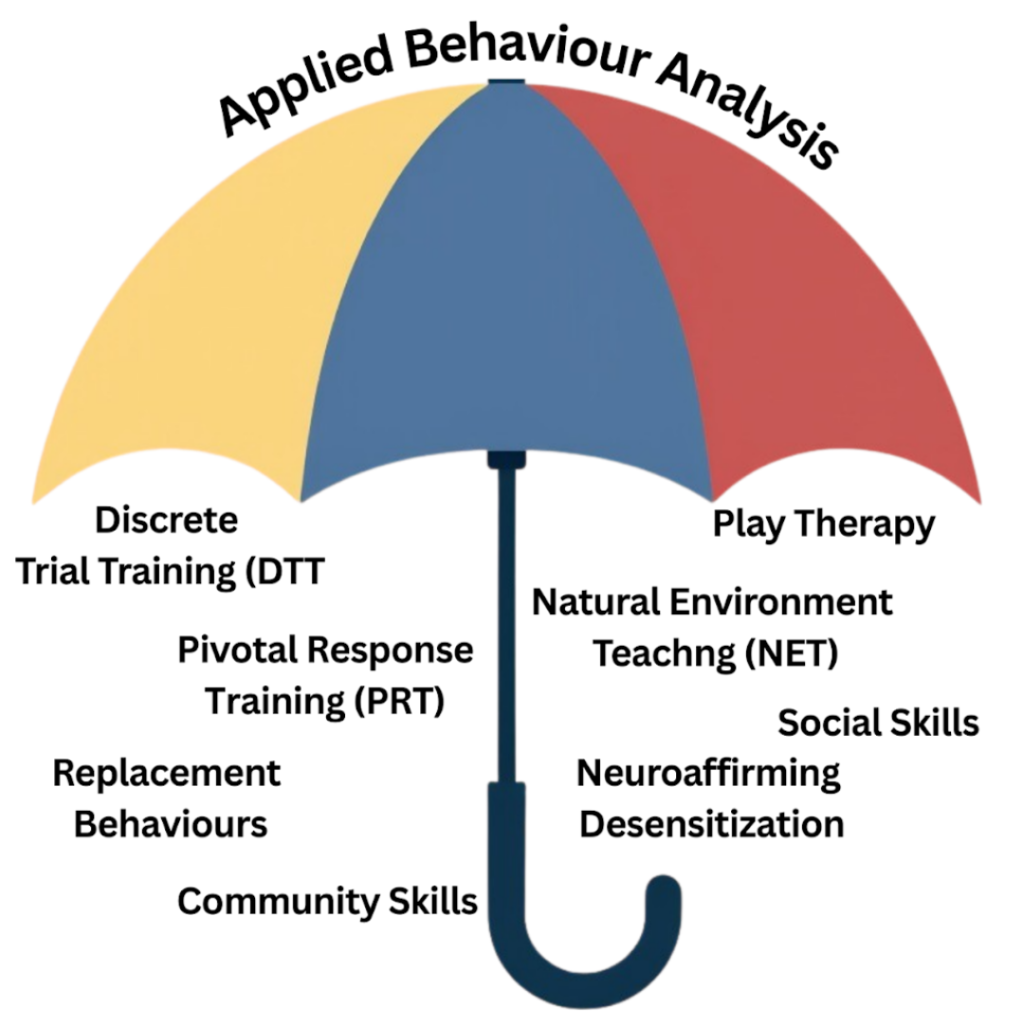
- Natural Environment Teaching (NET): Skill building that occurs within everyday routines and play, using naturally occurring motivation and reinforcement.
- Play-Based ABA Therapy: Uses child-led play to teach communication, social, and learning skills in a developmentally appropriate and engaging way.
- Pivotal Response Training (PRT): Focuses on pivotal skills such as motivation, self-initiation, and responsiveness, which lead to broader improvements across many areas.
- Social Skills Training: Targets skills such as conversation, turn-taking, emotional regulation, and peer interaction in individual or group settings.
- Community Skills Training: Supports participation in community settings such as stores, parks, libraries, recreational programs, and public transportation by teaching safety, independence, and social expectations.
- Teaching Replacement Behaviours: Identifying the purpose of a challenging behaviour and teaching a more appropriate, functional alternative that meets the same need.
- Neuroaffirming Desensitization: A respectful, consent-based approach to supporting children in tolerating sensory or medical experiences while honouring neurodiversity, autonomy, and emotional safety.
A high-quality ABA program thoughtfully selects and blends these approaches based on the child’s individual needs, preferences, and goals, always prioritizing dignity, meaningful participation, and long-term quality of life.
Our Approach at Elevated Abilities
At Elevated Abilities, ABA therapy is delivered through a play-based, relationship-centred, and neuroaffirming lens. Our programs may incorporate any combination of the approaches above, thoughtfully selected based on each child’s strengths, interests, sensory needs, and goals. We prioritize collaboration with families, child autonomy, and meaningful participation in daily life, focusing on building skills that support confidence, independence, and well-being. Our team is committed to providing ethical, respectful care that honours neurodiversity while supporting children in developing skills that are truly functional and life-enhancing.
How Does ABA Therapy Work?
ABA therapy combines evidence-based teaching strategies with meaningful practice in real-life settings. BCBAs observe behaviour patterns, assess what influences learning, and design individualized interventions that support positive, lasting change.
Key elements of ABA therapy include:
- Understanding Why Behaviours Happen: ABA looks at what happens before and after a behaviour to understand why it occurs, so support is targeted and meaningful.
- Using Reinforcement: Providing reinforcement to increase the likelihood that desired behaviours occur again.
- Data-Driven Decisions: Tracking progress and adjusting strategies based on measurable outcomes.
- Skill Breakdown: Teaching skills step-by-step to make learning easier.
- Consistency: Reinforcing skills across different settings such as home, school, and community.
Benefits of ABA Therapy for Children with ASD
ABA therapy can support children with ASD in many areas of development, including:
1. Improved Communication Skills
ABA helps children develop verbal and non-verbal communication, such as requesting items, expressing needs, or using gestures and eye contact.
2. Enhanced Social Skills
Children learn how to interact with peers, take turns, share, and understand social cues, skills that are essential for building relationships.
3. Increased Independence
ABA focuses on daily living skills like dressing, eating, hygiene, and following routines, helping children become more independent over time.
4. Reduction in Challenging Behaviours
By understanding the reason behind certain behaviours, ABA helps replace challenging behaviours with more appropriate alternatives.
5. Better Academic and Learning Readiness
ABA improves focus, attention, and task completion, which can positively impact school performance and learning outcomes.
Is ABA Therapy Suitable for Every Child?
ABA therapy is highly adaptable and can benefit children across the autism spectrum. Early intervention often leads to the best outcomes, but ABA can be effective at any age when tailored appropriately.
The success of ABA depends on:
- Individualized programming guided by ongoing data
- Qualified BCBA supervision
- Consistent family involvement across settings
Parents and caregivers play a crucial role by reinforcing skills learned during therapy in everyday situations.
Final Thoughts
ABA therapy is a well-researched and widely trusted approach that helps children with ASD develop essential life skills, improve communication, and gain greater independence. By focusing on each child’s unique needs and strengths, ABA empowers children to reach their full potential and thrive in their daily lives.
If you’re considering ABA therapy for your child, we invite you to book a meeting with us. Our experienced professionals are here to guide you in finding the right approach and level of support.
Leave a Reply